
Two records about one toothpaste order contradict each other, and the order is waiting. The instinct is to ask which document is right. The better first question is whether the two documents describe the same goods at all, because a fair share of apparent conflicts are two records about two different batches. The six moves below settle identity first and the paper second.
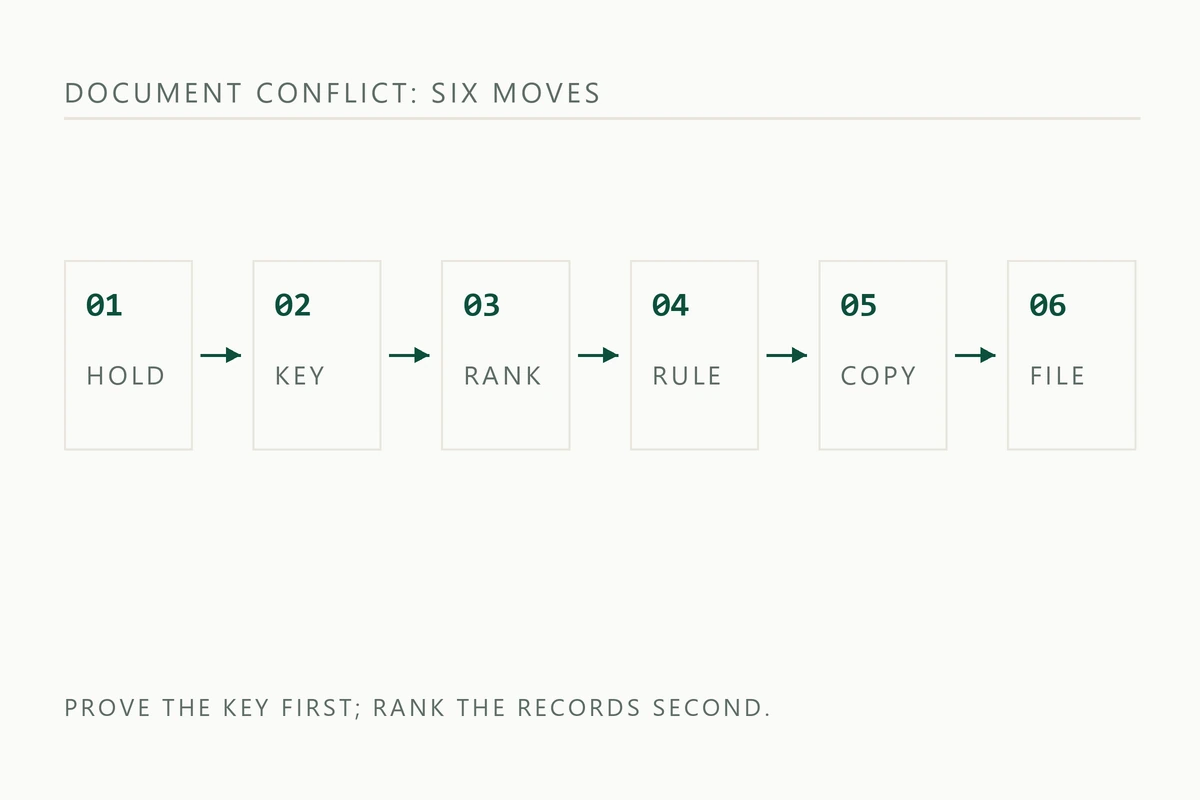
Stop the goods before you argue about paper
A conflict is cheap while the goods sit in one place, and expensive once they are on a pallet or in a container, because correction then means physical work instead of a reprinted page.
So the first move is a hold, written down: which carton range is stopped, where it stands, and who may release it. A hold that lives only in an email chain is released by whoever loads the truck. While the goods are reachable you can read a batch code off a carton. After loading, every question is answered from documents alone, and those are the documents that disagree.
Two records only conflict if they describe one thing
Before ranking anything, prove identity on three fields: the batch reference, the carton mark range, and the product reference with its revision. If one differs, you do not have a conflict. You have two records of two different things, and the fix is a filing problem.
This is commoner than it sounds. A certificate of analysis is issued per batch; a packing list is written per shipment. One shipment can carry two batches, and a single line on that list then cannot be true of both.
Rank the records by distance from the goods
Once the key matches, rank both records by how close each was to the physical event. Three tiers are enough:
- Direct: written by a party holding the goods at the moment of the event, such as a batch code printed on a case or a note signed at the dock.
- Derived: produced by copying or totalling a direct record, such as an invoice, a typed packing list or a pallet label.
- Second-hand: written afterwards from memory or intention, such as a revised specification or a confirmation message.
The rule is not “the later document wins” and not “the senior party wins”. A derived record never overrides the record it was derived from. That settles most cases, and it explains a failure buyers meet often: a specification reissued after the shipment proves nothing about the batch in the container, because it describes what the factory intends to make.
| The pair | What it actually means | What settles it |
|---|---|---|
| Instruction against instruction | Two versions of one requirement | The revision in force on the run date |
| Instruction against result | The goods may not conform | A measurement, not a reissue |
| Result against result | One figure was copied wrongly | The direct record, whichever side wrote it |
The middle row is the one to slow down on: correcting the document can conceal a nonconformance, so the ruling has to come from a check on the goods.
Name the party who may correct it
Only the issuer corrects its own record, and it corrects by issuing a revision that names the one it replaces. A buyer who edits a supplier's analysis certificate has created a third document, not a corrected one.
So this move has two outputs: a written statement of which value governs, and a named person at the issuing party who will reissue. Treat a verbal agreement as nothing until it arrives. Version control on your own side is the change management question.
Fix the copies the wrong record generated
The wrong value has usually travelled. Before correcting it, list every place the field appears: the packing list line, the invoice, the declaration, the pallet label, and the sheet your own warehouse keyed it into. Correcting the source and leaving the copies is how a resolved conflict returns a month later, in another department, as a new one.
File the answer, and the trigger to look again
A conflict file needs five lines: the two records, the key that proved they describe the same goods, the ruling and the rule behind it, who reissued, and which copies changed.
The sixth line is the one buyers leave out: the condition that would reopen the question. If the same field collides twice across two orders, the requirement is ambiguous, and the correction belongs in the next purchase order instead of the next argument.
Three questions buyers ask
The label disagrees with the approved artwork. Which is right?
Neither, because they answer different questions. The artwork release states what was approved; the label states what was printed. A difference is a printing nonconformance, not a paperwork dispute. Reading a release properly is the artwork approval question.
The supplier has reissued the specification. Is the conflict closed?
Only for future runs. A reissued specification changes what will be made and cannot change what was made. For the batch in hand you need the batch record and the measurement, which is what a certificate of analysis is meant to carry.
Can I hold payment until the documents agree?
Payment attaches to the acceptance clause, not to the paperwork, so read the milestone before withholding anything. The payment terms question is which event releases each payment.
What to send before the next order
Send the factory the field list you compare, the revision of each instruction in force, and the form you want a correction to arrive in. Send your own warehouse the same list, because some of the copies are keyed there.
Start from the NASHUDA toothpaste series or the Orbit & White range, and send your requirements with the destination market, the SKU and pack size, and the documents you intend to compare.