
A toothpaste order is priced in one conversation and paid in another, and the payment schedule sits between them. It is the part buyers read least carefully. A schedule is not a percentage split with dates beside it: it is a list of releases, and each release should name something you will be holding when it falls due.
1. A payment schedule is a list of releases
Read a proposed schedule line by line and ask two questions of each: how much, and what will I have in hand when it falls due. The first is answered in every offer. The second is often answered nowhere, and a line without an answer is not a term.
Ask for the schedule inside the quotation rather than after it, so the release points are visible while suppliers are still being compared; the quotation comparison method puts the price on one basis, and the schedule belongs on the same sheet. The split itself is negotiated, and this page states no figure for it: a deposit level copied from a website is not an agreement.
2. The five things a payment can be attached to
Almost every order can hang its releases on five checkable things, in the order they become available. A repeat of a standard item may skip the first two.
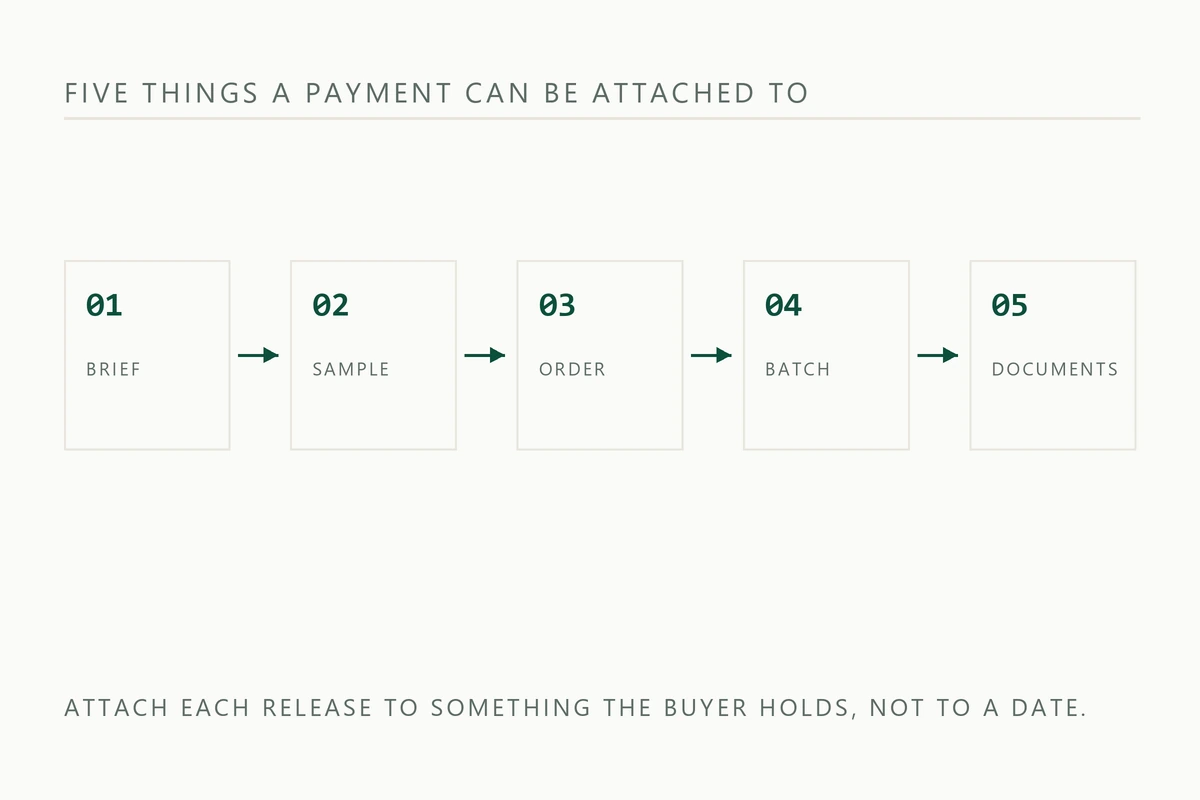
- Brief. A versioned brief naming product, pack, carton and destination market. A release attached here buys confirmation that both sides filed the same version, which the change control record points back to.
- Sample. An approved sample both sides signed and one retained. Paying without that reference buys a photograph, and the approved sample versus production batch comparison needs it to exist.
- Order. A purchase order restating the brief and the sample instead of citing an earlier email. It is the release most often attached to nothing, because each side assumes the other wrote it down.
- Batch. A production batch reported against the approved sample, with records that let you compare like with like. The certificate of analysis is one of those records, not the whole file.
- Documents. The set that closes the order: packing list, invoice, transport document and whatever the destination market requires. List them in the schedule rather than writing shipping documents.
3. What each release justifies, and what it does not prove
The table is the part to keep; its last column matters most: a document requested at the wrong release point is one you paid for before you needed it.
| Release point | What the buyer holds | What it justifies | What it does not prove |
|---|---|---|---|
| Brief | A dated version, referenced in the quotation | Both sides pricing the same product | That the product can be made |
| Sample | A signed, retained sample | That appearance, flavour and pack were accepted | That a batch will match it |
| Order | A purchase order quoting both versions | That quantity and scope are agreed | That the goods exist |
| Batch | A batch record and its tests | That this batch was checked against the reference | That every carton came from it |
| Documents | The named set, complete | That the file can be closed | That the goods conform |
4. Acceptance is a different sentence from delivery
Delivery, acceptance and payment are three separate events, and a term sheet that treats them as one lets a buyer pay on a carrier's signature. Delivery is the goods reaching the named place, acceptance is the buyer agreeing that they conform, and payment is money moving.
In a supplier's template, look for the clause that accepts on silence: goods are treated as accepted if no objection is raised within some period. That is not automatically unfair, but two details decide whether you can inspect. The first is where the period starts, because one beginning at shipment may end before the container reaches your dock. The second is what counts as an objection: a phone call and a written notice are not the same act.
Acceptance needs a reference: the approved sample and the brief, not an impression, which is why the two earliest releases carry the weight. Our receiving checklist covers what to record at the dock, and the record has to be made before the acceptance period runs out.
One further sentence belongs beside it: what happens to a batch rejected after part of the schedule has been paid. Refund, replacement, rework and credit are four different answers, so the schedule should say which applies and to which release. The law governing your agreement decides how the words are read; the point is to have the sentence written.
5. What a term sheet has to name
A term sheet should be short and checkable. These fields settle most of the arguments afterwards:
- Each release: the share, and the thing it is attached to, by name and version.
- The acceptance definition: who inspects, against what, from which event, and how an objection is raised.
- What a rejected batch does to the releases already paid.
- The document set that closes the order, listed rather than described.
- Which brief version and which sample the schedule refers to.
Send these with the enquiry, not after the quotation. A factory that answers them in its first reply tells you how the order will run.
6. What to send the factory
Commercial questions get useful answers when the request is specific: the destination market, the SKUs and pack sizes, the release points you want, the documents your bank or customs broker will ask for, and the reference you will inspect against. That lets a factory answer with a schedule, not a policy.
If the range is still open, start from the NASHUDA toothpaste series or the SP probiotic whitening series, then send your requirements with the release points you intend to use, and we will confirm the schedule, the document set and the acceptance reference for that product. The MOQ and pricing checklist covers the part of the quotation above the schedule.