
To compare toothpaste supplier quotations, first align the product specification, quantity per SKU, packaging and delivery scope. Then separate recurring unit charges, one-time charges and unresolved costs. A low tube price is not a reliable comparison when the offers describe different orders.
From our factory's perspective, a clear comparison starts with a versioned purchasing brief. This guide helps overseas importers, wholesalers, distributors and private label brands review the replies they receive. It covers quotation evaluation; our toothpaste RFQ checklist explains what to send before requesting those replies.
1. Freeze the reference order before ranking suppliers
Create one reference sheet containing the destination market, product reference, formula requirements, net weight, flavor, packaging and first-order quantity for each SKU. Give it a date and revision number. Ask each supplier to identify every departure from that sheet rather than silently substituting a different specification.
If one quotation covers an existing branded item and another covers your own artwork, separate them into different comparisons. Our stock versus private label guide can help clarify that decision. A forecast for later orders should remain separate from the quantity you are actually considering now.
2. Use a quotation comparison worksheet
Copy these rows into your purchasing sheet and add a column for each supplier. Enter the actual written response, its document reference and any follow-up needed. Use “unconfirmed” for missing information; an empty cell must not become a zero-cost assumption.
| Comparison field | Record for every offer | Question if it differs |
|---|---|---|
| Product and revision | SKU, specification version, formula reference and net weight | Is this the same configuration we requested? |
| Order quantity | Units per SKU, minimums and permitted quantity variation | Does the price depend on a larger commitment? |
| Packaging | Tube or bottle, cap, individual box, carton and printing scope | Which components are excluded or substituted? |
| Price unit | Currency and price per tube, set or carton | How many sale units does that quoted unit contain? |
| Separate charges | Samples, artwork, tooling, assessments and other quoted services | Which charges recur, and which apply once? |
| Delivery scope | Agreed trade term, named place, edition and included services | Which additional costs remain for the buyer? |
| Commercial conditions | Validity date, payment stages and schedule assumptions | What event starts each quoted time period? |
| Evidence and open items | Specification, sample and requested document references | What needs confirmation before an order decision? |
3. Compare the same price unit and packaging scope
Convert carton or set prices into the same sale-unit basis only after confirming the contents. A carton containing individually boxed tubes is a different configuration from loose tubes. Also record the requested packing arrangement, so later freight estimates use consistent quantities and dimensions.
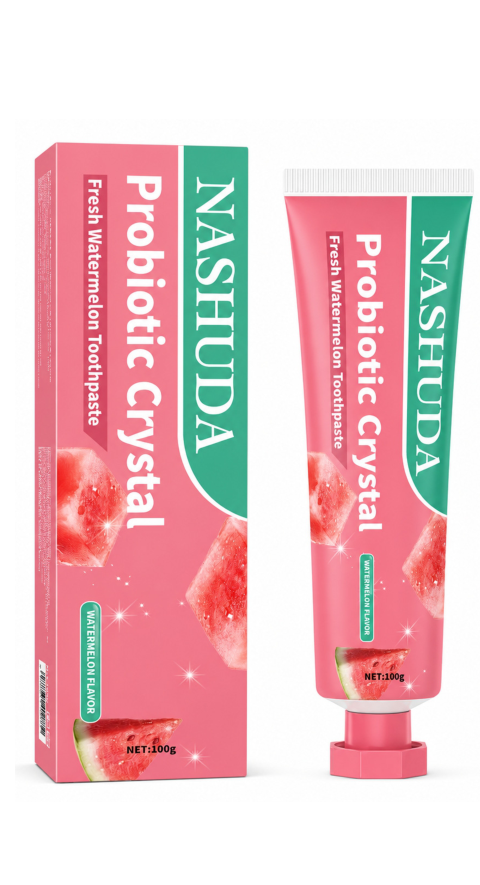
Keep alternatives visible. For example, if a supplier proposes another cap or artwork process, record it as an alternative with its own price. Do not overwrite the requested configuration and lose the reason for the difference. Browse our NASHUDA toothpaste series for item references, then ask our team to confirm the current specification; catalog names do not establish all the quoted conditions.
4. Separate included costs from costs still to confirm
Ask for the delivery basis in writing. The International Chamber of Commerce's Incoterms 2020 overview explains that the rules allocate costs, risks and obligations between buyers and sellers. Record the selected rule, named place and edition alongside each offer, and ask which services its amount includes.
For your comparison, make a separate list of costs outside the quoted amount. Obtain applicable estimates from the responsible provider rather than inserting a generic percentage. Keep unconfirmed freight, destination charges, duties and taxes visibly unresolved. Avoid double counting a service already included in the supplier's written price.
5. Work through a clearly hypothetical example
Illustration only: these are invented arithmetic inputs, not NASHUDA prices, market benchmarks or minimum order quantities. Assume two offers cover the same agreed specification, 10,000 tubes and the same delivery boundary. Offer A shows USD 0.80 per tube plus a separately quoted USD 300 setup charge. Offer B shows USD 0.84 per tube with that setup included.
- Offer A: 10,000 × USD 0.80 + USD 300 = USD 8,300, or USD 0.83 per tube.
- Offer B: 10,000 × USD 0.84 = USD 8,400, or USD 0.84 per tube.
- The difference within this limited scope is USD 100 for the order.
This calculation does not establish total landed cost or identify the better supplier. It excludes any cost outside the assumed common boundary. If the packaging, evidence, payment conditions or delivery assumptions differ, resolve those differences before using the totals to rank the offers. For repeat orders, ask whether the setup charge actually disappears rather than assuming it will.
6. Close the gaps before requesting a final revision
Send one numbered clarification list linking each question to the relevant worksheet row. Ask for a revised quotation showing the same specification revision and a clear list of remaining exceptions. Retain the earlier version so your team can see what changed.
- Confirm the exact product and pack configuration against the reference sheet.
- Reconcile quantities, currencies, price units and separate charges.
- Resolve delivery scope and the meaning of any proposed dispatch or arrival date.
- Review the sample and requested documents using our sample evaluation checklist.
- Record unresolved items, their owner and the evidence needed before approval.
A quotation comparison is ready for a purchasing decision when your team can explain both the price difference and the remaining conditions. It is not ready merely because one spreadsheet total is lower.
Ask our factory to clarify your quotation scope. Send your destination market, product reference, quantity per SKU, packaging brief and open questions. Our team can discuss the project-specific details that need confirmation.