Choose between stock toothpaste and private label by deciding whose brand you need to sell, which specifications are essential, and what your first order must achieve. Existing branded products may suit a distribution test; a private label project suits a requirement to sell under your own brand. Neither route confirms availability, minimum order quantity or delivery timing without a specific quotation.
At NASHUDA, we recommend that overseas importers, wholesalers and brand owners explain their purchasing goal before requesting a product price. This guide compares the decisions involved in each route and gives you a checklist to use with our factory team. The examples below are hypothetical purchasing situations, not customer cases or confirmed offers.
1. Separate catalog products, confirmed stock and private label
A catalog product is a reference for a product offered for discussion. Confirmed stock means the supplier has checked the particular item, configuration and quantity available for your order. A catalog listing alone does not establish that inventory exists or is reserved for you.
Private label means discussing supply under your own brand. It does not necessarily mean developing a new formula: ask whether your project would use an existing formulation, require changes or need separate development. Also clarify what the supplier means by OEM or ODM instead of relying on those labels to define the work.
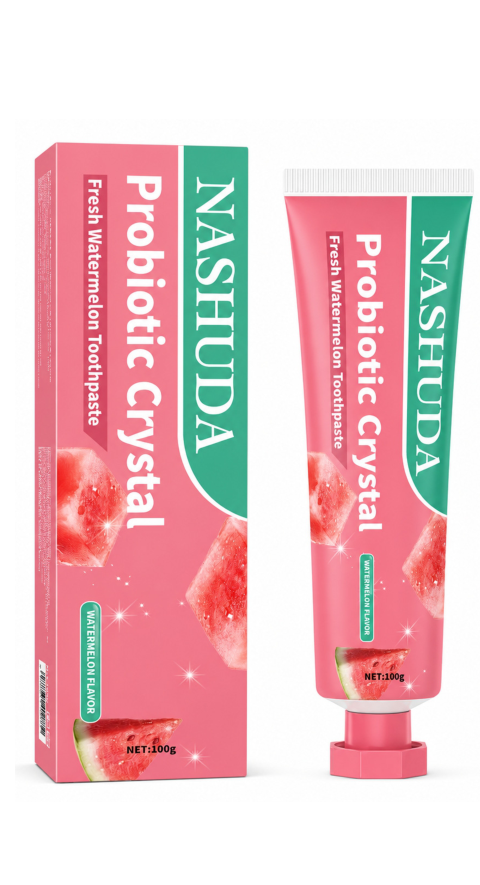
Start with our NASHUDA toothpaste collection when you need a product reference. For either route, ask which details shown in the catalog apply to the current offer, including pack configuration and available documentation.
2. Compare the decisions before comparing prices
| Decision | Existing branded product | Private label project |
|---|---|---|
| Brand on the pack | Confirm the existing brand and intended distribution arrangement | Specify your brand and the artwork to be reviewed |
| Product specification | Check the current specification for the selected item | Define essential requirements and ask which options are feasible |
| Inventory | Request confirmation of available quantity and reservation conditions | Confirm whether production or packaging work is required |
| Packaging | Review the supplied pack, language and carton configuration | Agree component choices, artwork versions and approval responsibilities |
| Order quantity | Ask for conditions by item and carton configuration | Ask whether formula, pack size or artwork versions have separate minimums |
| Schedule | Confirm readiness, documents and the meaning of the dispatch date | List approvals and work that must finish before dispatch |
| Reorders | Ask how repeat availability and product changes will be communicated | Agree the specification and artwork references for repeat orders |
Use the table as a question list, not as a promise that one route always costs less or ships sooner. A lower unit price is only useful when the product, quantity, packaging and delivery basis meet the same purchasing need.
3. Choose the route that answers your first-order question
Scenario A: an importer is testing a distribution channel
Suppose an importer wants to learn which product references retailers will reorder and does not require its own brand on the first shipment. An existing branded-product discussion may fit that goal. The importer should still confirm the distribution arrangement, product information, pack suitability, available quantities and total order conditions before deciding.
Scenario B: a brand owner needs its own shelf identity
Suppose a buyer's launch depends on its own brand name and approved packaging. A private label discussion is more relevant because unchanged branded stock does not answer that requirement. The buyer should identify who prepares artwork, who reviews the destination-market requirements and which sample represents the proposed final configuration.
Scenario C: the route is still undecided
Ask for two clearly separated options against the same destination, intended channel and quantity assumptions. List the differences in branding, specification, packaging and work included. Do not compare the cheapest existing item with an unrelated custom brief and treat the gap as the cost of branding alone.
4. Check the full commitment, not only the tube price
Request a breakdown of what is included and excluded: product, individual box, outer carton, samples, artwork work, any requested assessment and delivery. Ask which charges apply once, which recur and which are estimates. Keep the quotation currency, validity and payment terms with the comparison.
Separate your first-order quantity from your sales forecast. An optimistic forecast is not a confirmed reorder. Consider how you will review unsold items, repeat availability and any unused project-specific packaging before committing. The supplier must confirm the actual commercial terms; this guide does not prescribe a budget or minimum quantity.
5. Do not let the route replace product review
For both routes, check the exact item and documents proposed for your destination. Existing packaging should not be assumed suitable for every market. With private label, a brand name on a tube does not by itself confirm formula ownership, exclusivity or unrestricted reuse of artwork. Ask for the agreed scope in writing.
Review samples against the configuration you intend to buy. Record what the sample demonstrates and what remains undecided using our sample evaluation checklist. If you select private label, our brand-launch overview provides additional planning context; confirm all project-specific conditions directly with the factory.
6. Send a brief that makes the route clear
- Destination market and intended sales channel.
- Existing brand, your own brand, or two separate options for comparison.
- Catalog reference or essential product requirements.
- First-order quantity per SKU and a separately labeled forecast.
- Pack format, artwork status and language requirements.
- Target date, specifying whether it means dispatch or arrival.
- Documents needed for your team's review and open questions.
Use our RFQ template to turn this brief into a quotation request. Then compare the reply with your original goal: are you evaluating a distribution opportunity, preparing your own brand, or requesting evidence before choosing?
Discuss your sourcing route with our factory. Send your market, product reference, branding requirement and quantity. We can discuss the options that need confirmation for your project.