
Herbal toothpaste sounds straightforward to specify until two suppliers send ingredient documentation that cannot be compared. One sends a plant name and a percentage; the other sends an extract specification, a carrier, a standardisation marker and a declaration for the aromatic components. This guide sets out how to put botanical documentation on a common basis before you accept a herbal formula for a market outside China.
It is a purchasing framework, not a formulation recommendation or a statement about what any botanical ingredient does. Every figure below is a field for the supplier to complete under its own test method.
1. A plant name is not an ingredient identity
Botanical extracts are named by plant, part, extraction route and carrier, and different combinations are not interchangeable in a specification. Two "aloe" or "green tea" inputs can differ in the plant part used, the extraction solvent, the extract ratio and the material that carries the extract into the paste. Start by asking for the identity fields, not the marketing name.
| Identity field | Question to the supplier | Why it matters for comparison |
|---|---|---|
| Declared ingredient name | Which name appears in the ingredient list of the finished product? | The label name is what a market reviewer checks |
| Botanical source | Genus and species, and the plant part used | The same common name can cover different species and parts |
| Extraction route | Solvent or process, and the extract ratio | Changes both composition and labelling |
| Carrier or diluent | What carries the extract, and in what proportion | A 1:1 dilution is not the same input as a concentrate |
| Standardisation marker | Which compound is standardised, to what range, by which method | Turns "standardised extract" into a checkable number |
| Purity limits | Heavy metals, microbiological limits, solvent residues | Standard input hygiene for any oral-care material |
| Batch reference | Lot number linking documents to the delivered material | Prevents a report for another run being reused |
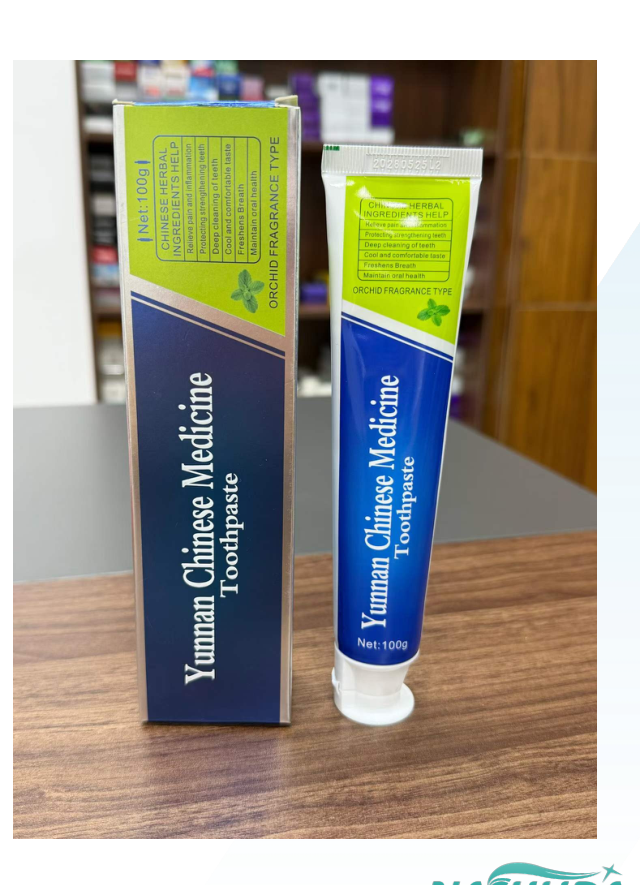
Browse our Probiotic Whitening and Herbal series for the products we supply as catalog references. A product name starts the discussion; the identity fields above are what makes the specification comparable.
2. Separate actives from flavour and colour
Herbal formulas often contain the same botanical in two roles: once as a named ingredient on the pack, and again inside a flavour or aromatic blend that is declared as "parfum" or "aroma". Ask the supplier to list, for each botanical input, whether it is present as a declared ingredient, as part of a flavour blend, or both, and what concentration each role represents.
The American Dental Association's toothpaste overview is useful here because it separates ingredients with recognised therapeutic roles from those that are flavouring or abrasive. Apply the same separation to your own claim list: a botanical that appears only inside a flavour blend supports a taste description, not a functional claim.
3. Check the aromatic declarations against the destination market
This is where many herbal proposals need revision, because the aromatic components that give a botanical formula its character are also the components regulators watch. The European Union adopted Commission Regulation (EU) 2023/1545 to update fragrance allergen labelling under the cosmetics regulation. Public summaries of that change describe a list that grows from 26 to more than 80 entries, new compliance dates for products placed on the EU market, and declaration thresholds of 0.001% in leave-on and 0.01% in rinse-off products, with ingredients still referred to by terms such as "parfum" or "aroma" in addition to the declared substance.
Several entries in the updated list are botanicals or their components — among them peppermint oil, eucalyptus oil, citrus peel oils, lavender oil and menthol. A herbal toothpaste built on those materials can fall inside the labelling duty even when the formula looks entirely plant-based. Ask your supplier for the quantitative aromatic composition of the flavour blend, not just the flavour name, and check it against the market where the product will be sold. Treat the summary above as a starting point and confirm the current legal text and dates for your market with your importer or regulatory adviser.
4. Compare two proposals on one page
Fill the table with what each supplier actually answered, and keep unanswered rows visible. A row answered "not applicable" is different from a row answered with a number.
| Comparison field | Supplier A | Supplier B |
|---|---|---|
| Declared ingredient name for each botanical | ||
| Species, plant part and extract ratio | ||
| Carrier and its proportion in the input | ||
| Standardisation marker, range and method | ||
| Concentration in the finished paste and how it is verified | ||
| Role of each botanical: declared ingredient, flavour blend, or both | ||
| Quantitative aromatic composition of the flavour blend | ||
| Allergen declaration check for the destination market | ||
| Purity certificates and batch reference |
Use our quotation comparison guide so price scope, packaging and delivery sit on the same basis as the ingredient rows, and our artwork approval checklist before the ingredient list is transferred to a printed tube.
5. Ask how the formula is controlled in production
A botanical input varies between harvests, so the specification has to state what is held constant. Ask which parameter is measured on incoming material, which is measured in the finished paste, how often, and what happens when a batch falls outside the range. Request the batch record fields that will accompany your shipment, so a delivered pallet can be matched to the material references you approved.
Our sample evaluation checklist covers recording a sample against a written specification; for a herbal formula, add the comparison between the standardisation marker on the approved sample and the marker declared for the production batch.
6. Keep claims inside the file
Herbal positioning invites wording about soothing, antibacterial action, gum support or natural protection. For each sentence that will be printed, ask which ingredient is responsible, which document supports it, and who reviewed it for the destination market. If the supporting document describes a raw material study rather than the finished toothpaste, record that limit in your own file instead of presenting it as product evidence.
7. Next step
Send us the destination market, the proposed herbal SKUs, the ingredient names you plan to declare on pack and the documentation you still need. We will answer with the identity and specification fields we can confirm, the items that require your decision, and the checks that sit with your importer. Send your herbal toothpaste questions, or start with the wider factory sourcing process.