
A pre-shipment inspection answers one question: does the finished goods lot match the order you placed. It happens after production and before the container is sealed, which is the last moment when a problem can still be corrected without return freight. This guide sets out what an inspection can actually verify on toothpaste, what it cannot, and how to record the result so a dispute has evidence behind it.
It is a buyer's checklist, not a claim about any factory's defect rate. Every limit in it is a number your team sets and writes down before the inspection starts.
1. Fix the reference document first
An inspection compares goods against something. Whichever document plays that role — the approved specification, the signed sample, the artwork revision and the purchase order — has to be identified by version and date before the inspector arrives. If two documents disagree, the inspection becomes an argument rather than a check.
List the reference set explicitly: product and formula reference, approved sample identity, artwork and carton revision, order quantity and packing configuration, and the destination labelling requirement. Our sample evaluation checklist covers documenting the approved sample so it can serve as this reference, and our artwork approval checklist covers the revision discipline for print.
2. Quantity and packing reconciliation
Quantity is the field where a small arithmetic difference becomes a commercial problem. Ask the inspector to reconcile finished units, tubes consumed, retail cartons and shipping cartons as separate lines rather than accepting a single total.
| Line | Record | Reconcile against |
|---|---|---|
| Finished units per SKU | Counted good units | Order quantity and tolerance |
| Retail cartons per SKU | Units per carton × cartons | Declared packing configuration |
| Shipping cartons | Cartons per pallet and pallets | Carton specification sheet |
| Scrap and rework | Tubes damaged or rejected, with reason | Explains any shortfall |
| Remainder | Units held back or produced over | Instructions for the excess |
Where a discrepancy appears, record it with the count and the reason rather than a percentage alone. A percentage hides whether the shortfall sits in one production run or is spread across the lot.
3. Sampling: how many units to open
You cannot test a whole lot, so the inspection needs a sampling rule agreed in advance. International practice for inspection by attributes is described in ISO 2859-1, Sampling procedures for inspection by attributes — Part 1: Sampling schemes indexed by acceptance quality limit (AQL) for lot-by-lot inspection. Buyers who use it usually agree the lot size, the sample size and the accept or reject number in the purchase order, so the inspector applies a rule instead of a preference. If your team prefers a simpler rule, write that down too — the point is that the rule exists before the result is known.
4. Check whether your destination requires a government PSI certificate
There are two different things called pre-shipment inspection and they are often confused. The first is the commercial check described in this guide, which you or your agent commission. The second is a government-mandated pre-shipment inspection, where an appointed agency verifies and certifies the goods before they may be imported. Several importing countries require the second, and where it applies, a commercial inspection does not replace it.
Because an import requirement is a matter of destination law, the question belongs with your importer or a regulatory adviser, not with the factory. Ask: does this destination require a pre-shipment inspection certificate for oral-care products, which agency is appointed, at what point in the process is the inspection booked, and which documents must be ready for it. The World Trade Organization's technical note on pre-shipment inspection is a useful starting point for understanding the instrument, but confirm your own market's current rule separately.
Two planning consequences follow. Booking the government inspection takes time, so it belongs in the schedule next to production and freight rather than after them. And if your destination requires it, the certificate is part of the shipping document set — plan who holds the original and who receives a copy before the container leaves.
5. What to examine on each sampled unit
Toothpaste has a few failure modes a buyer can see without a laboratory. Check them on the sample and log the count, not an impression.
| Area | What to look at | Defect examples to log |
|---|---|---|
| Tube or bottle | Seal integrity, cap fit, fill level, print position | Leaking seal, loose cap, short fill, off-register print |
| Paste | Colour, texture, separation, visible foreign matter | Colour drift, phase separation, contamination |
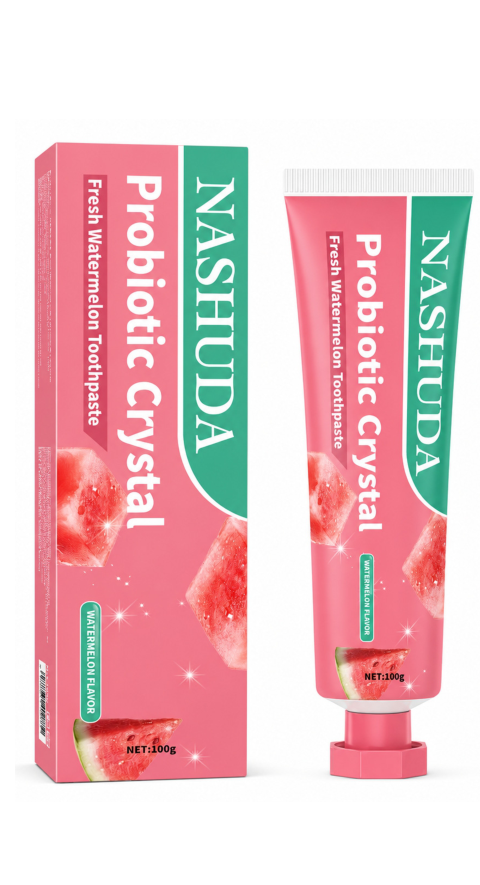
| Retail carton | Copy accuracy, barcode scan, batch and date marking | Wrong revision, unreadable code, missing date |
| Shipping carton | Dimensions, markings, closure, count per carton | Wrong dimension, missing shipping mark, open flap |
| Labelling | Ingredient list, language, warnings, net content | Wrong language, absent warning, mismatched net content |
| Identity | Batch code, production and expiry dates | Code that cannot be traced to the batch record |
6. Record the batch trail, not just the result
An inspection that passes without a traceable batch reference is difficult to use later. Ask for the batch code on the sampled units, the corresponding batch record reference, and the certificate of analysis that covers that batch. Our quality control guide explains why batch traceability sits at the centre of the documentation a factory keeps; the inspection is where you confirm the delivered goods actually carry those references.
7. Agree what happens to a failed lot
Decide the remedy before the result arrives, so a rejection does not become a negotiation under time pressure. The usual options are rework and re-inspection, replacement of the affected units, or acceptance of the lot with a documented concession and an agreed price adjustment. Write which option applies to which defect class, and who pays for the re-inspection.
Keep a defect log with a photograph per item, the unit identity, the defect class and the reference document it breaches. Photographs should show the defect and the batch code in the same frame.
8. What inspection does not cover
Be explicit about the limits, because buyers sometimes treat a passed inspection as a stronger statement than it is. A visual pre-shipment check does not establish long-term stability, microbiological safety, abrasive behaviour, fluoride content or compliance for your market. Those come from the specification, the test reports and your market review, and they are confirmed at other stages. An inspection confirms that what was produced matches what was agreed, in the condition it was in on the day it was checked.
9. Next step
Send us the destination market, the SKUs, the packing configuration and the reference documents you intend to inspect against, and we will confirm the batch records, certificates and carton details that accompany the shipment. Send your inspection requirements, or start with our carton specification sheet before the freight quotation.