
A toothpaste batch leaves the factory against a specification. What happens to it next is not in the certificate of analysis: a pallet that stood in the sun at the port, a dock where it waited all afternoon, a stack taller than the carton was built for. Storage is a condition the supplier states and the buyer keeps; this guide covers the half you keep.
1. The storage condition is a document, not a habit
The condition normally sits in one of three places: the product specification, the technical data sheet, or the print on the carton. Find it, quote it, and put it into the receiving instruction your warehouse reads. A condition that stays in a supplier PDF and never reaches the person stacking the pallet has not been agreed; it has been filed.
If none of those documents states one, send the question before the container ships rather than filling the gap from memory. A range you invented cannot be held against anybody later, and it becomes the standard your own complaint is measured against.
Keep it beside your shelf-life evidence: our guide to shelf-life documentation shows how a durability date is supported, and the storage condition decides whether it survives your warehouse. The carton, pallet and container plan agreed at order stage is what your store must receive.
2. Four items to get in writing before the container lands
These four settle most of the argument after a damaged delivery, because each turns into an instruction somebody can be held to.
| Item | Where it normally sits | What it lets you do |
|---|---|---|
| Storage condition | Specification or technical data sheet, as a range | Hand the warehouse a written instruction, not a house norm |
| Date code: format, position, meaning | Carton print, or the packaging field | Rotate stock without opening a carton to look |
| Stack limit and pallet pattern | Carton specification | Decide how high pallets go and how many fit |
| Handling marks and pallet type | Carton print and packing list | Tell the crew what not to do before they do it |
Ask for them with the order, not with the first complaint. The storage condition is the only line your own team has to keep every day.
3. Five moves that belong to the buyer
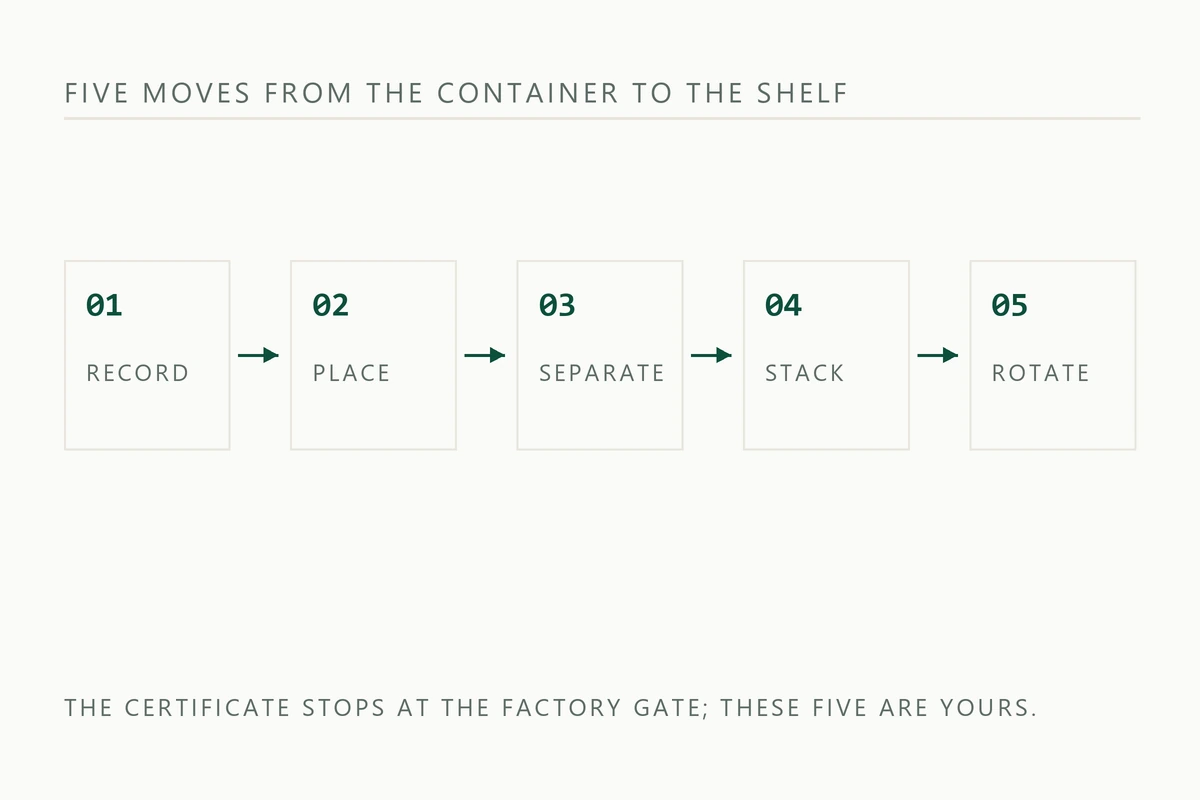
- Record. Write the date code, the carton count and the condition of the outer carton into a receiving log before the pallet leaves the dock. A batch you cannot date is a batch you cannot rotate.
- Place. Give the pallet a defined position: off the floor, off the wall, out of the line of a window or roof panel. Sun on the side of a stack is heat the supplier never measured.
- Separate. Keep cartons away from solvents, paint and cleaning chemicals. A flavoured paste beside an open drum leaves you with a complaint and no clean sample to compare against.
- Stack. Stack to the carton's stated limit and not one layer more, then check the bottom carton. Softened board at the base is the first sign of a store doing something the specification did not assume.
- Rotate. Issue the oldest date code first, and read the date again at issue. A rotation rule that lives in a procedure file is the one that fails when a picker is in a hurry.
Step 01 carries most weight: everything after it rests on a record made at the right moment.
4. What a hot or damp store changes that no document records
Cartons usually show the damage before the paste does. Board takes up moisture and loses stiffness, so a stack that was stable when built slumps overnight, and a carton that was crisp at the factory looks handled before anyone opens it.
Then there is what you cannot see from outside. A paste can take on odour from its surroundings, and flavour is the hardest attribute to argue about. What you can observe when a carton is opened:
- Tubes out of line in the tray, or a tray that no longer holds its shape.
- Board gone soft at the base, corners crushed.
- Print that smudges under a thumb where it should be dry.
- A smell inside the carton that is not the product's own.
Each is an observation to photograph and date, not proof of a cause. That distinction is what makes it usable later.
5. When a carton arrives already compromised
Separate the two situations before you react. Damage visible at the dock is a receiving question: note it on the delivery document, photograph the pallet and keep the carton. A condition that appears months later is an evidence question, answered or lost by whether you recorded the store as carefully as the goods.
In both cases, compare against the reference you already hold rather than against memory; the approved sample versus production batch method gives you the fields. Attach what you found to the claim pack in our receiving checklist, and hold one carton back from each affected pallet. A carton that has been thrown away cannot be inspected by anybody.
6. What to send the factory
Storage questions get useful answers when you send the route and the store, not only the product: the destination market and its climate, the SKUs and pack sizes, whether the goods sit in ambient or cooled space, the date-code format your system has to read, and the carton marks your crew works from.
If the format is still open, the carton specification checklist covers the stacking and marking fields that decide how a pallet behaves in your store. When the range is the open question, start from the NASHUDA toothpaste series or the SP probiotic whitening series, then send your requirements with the storage condition you intend to use, and we will confirm what the specification states for that product and which documents travel with the order.