
Choose bottled or tube toothpaste by comparing the actual filled package against your channel requirements. A bottle shape does not establish dispensing performance, and a familiar tube format does not settle every closure or transport question. Before asking our factory for a proposal, identify the product, intended user, selling channel and packaging features that matter to your order.
For importers, wholesalers and private label buyers, the practical decision is which configuration can meet an agreed brief with evidence you can review. Compare named samples and specifications rather than declaring one format universally better. Keep the formula decision separate from the packaging decision until the proposed combination has been assessed.
1. Define the complete package being compared
For a tube, identify the body, shoulder, outlet, cap and any retail box. For a bottle, identify the container, dispensing assembly, protective cover or lock where present, and any retail box. Ask for the relevant component references and material information. Do not infer the internal mechanism from the external shape.
Our bottled series catalog includes identifiable product references, while the NASHUDA collection provides tube references. These are starting points for an inquiry. Confirm the exact net content, components, formula and configuration proposed for your purchase; a catalog listing does not reserve stock or establish customization availability.
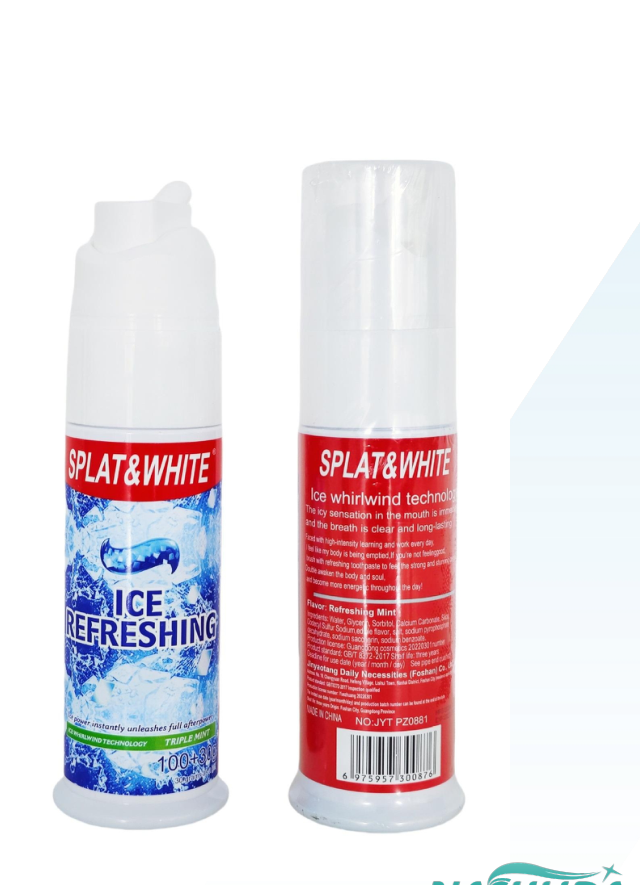
2. Compare dispensing under agreed conditions
Ask how the intended user opens the package and dispenses the paste. With a tube, record the squeezing action, outlet behavior and closing steps. With a dispenser, record any start-up steps, actuator movement and instructions for use. Describe actual observations instead of assuming a bottle provides a fixed dose or empties completely.
Use the supplied handling instructions and document the sample condition, orientation and review procedure. If dispensing quantity or remaining product matters to your buying decision, agree a measurement method and acceptance criteria with the appropriate reviewer. An informal demonstration can identify questions, but it should not be presented as proof of consistent performance throughout the product's life.
3. Use a side-by-side purchasing sheet
Complete the table for the two actual candidates. Enter sample IDs and specification revisions above it, then record findings and evidence references in each column. “Not evaluated” is a valid entry when a check has not been performed.
| Decision area | Tube candidate | Bottled candidate |
|---|---|---|
| Opening and dispensing | Cap, outlet and squeezing observations: ______ | Cover, activation and dispensing observations: ______ |
| Closing between uses | Closure steps and observed residue: ______ | Closure or lock steps and observed residue: ______ |
| Filled-package evidence | Formula/pack reference and reports: ______ | Formula/pack reference and reports: ______ |
| Display fit | Dimensions and intended position: ______ | Dimensions and intended position: ______ |
| Shipment configuration | Protection and outer carton reference: ______ | Protection and outer carton reference: ______ |
| Commercial scope | Quantity, included components, open items: ______ | Quantity, included components, open items: ______ |
4. Ask what supports closure and compatibility statements
Request evidence that relates to the proposed formula and complete package. Ask what was tested, under which conditions, with which components and against what acceptance criteria. A component supplier's general description is useful background, but it does not establish the result for your finished toothpaste.
For example, packaging manufacturer Aptar's GSA product page notes that transport-test results can vary with container shape, size and sample formula. That is a useful reminder to check the scope of evidence. It is not evidence that our catalog product uses that pump or has passed the same assessment.
Keep leakage observations, dispensing observations and product-quality questions separate. A sample that looks clean after a short review does not establish microbial protection, shelf life or suitability for every shipping route. Request the relevant assessment when such a claim matters to your decision. Avoid adding “airless,” “leak-proof” or similar wording to artwork without supporting product-specific information.
5. Check display, handling and distribution fit
Measure the proposed filled package and retail box against the space your channel actually provides. Ask whether the product will be displayed standing, hanging or inside a display unit. Check the intended placement of product information, batch identification and any retailer-required label. Do not assume that a taller bottle earns a higher selling price or that a tube necessarily uses less shipping space.
For distribution, request the packing configuration for each candidate. A change in the dispenser, cap or protective cover may require a different arrangement, so confirm the complete proposal before comparing freight estimates. Our carton specification worksheet helps organize dimensions, weights and packing levels without treating retail-pack dimensions as outer-carton dimensions.
6. Compare quotations without hiding differences
Ask for the same quantity basis and a clear list of included components. Keep decoration, retail boxes, protective parts and any sample or assessment charges visible. If net contents differ, flag that difference before comparing prices. There is no verified universal cost premium or minimum quantity for either format in this guide.
Request current conditions for the exact configuration, including which changes require a revised quotation or sample. Treat recyclability and recycled-content statements as separate evidence questions about the actual materials and destination system; a format name alone cannot settle them.
7. Approve a defined scope
Use our sample evaluation guide to record the selected sample, accepted features, open questions and reviewer. If the commercial proposal changes the formula or packaging, identify which checks need repeating. Approval of appearance should not silently become approval of performance or artwork claims.
To discuss the options with our toothpaste factory, send your product references, destination, quantities and packaging priorities. State which dispensing and display questions you need the samples to answer so the next discussion can focus on a concrete proposal.