
A mixed-SKU toothpaste order needs agreement at three levels: which products are ordered, which products go into each carton, and which cartons travel together. A supplier agreeing to quote several items does not automatically mean those items can share a carton or meet one combined minimum. When you contact our factory, send a line-by-line request and describe the packing arrangement you want checked.
This guide is for overseas importers, wholesalers, distributors and private label buyers who already have a shortlist. If you are still choosing that shortlist, start with our trial assortment worksheet. Here, the purchasing question is how to keep an agreed assortment identifiable through quotation, packing and receipt.
1. What does “mixed” mean in this request?
Specify whether you want different SKUs on one purchase order, separate single-SKU cartons in one shipment, or more than one SKU inside the same carton. Also distinguish a mixed pallet from a mixed carton. These arrangements require different information, and acceptance of one does not confirm acceptance of another.
Write the requested arrangement in plain language: “Please quote A and B in separate cartons for one destination, and confirm whether they can ship together.” If you want mixed cartons, state the proposed contents of each carton and ask whether that configuration is available. Keep that answer separate from the price quotation and retain it with the order revision.
2. Which product does each order line identify?
Use a buyer SKU and the supplier's product reference together. Add the agreed flavor, net content, formula reference where applicable, packaging version and unit of measure. A short description such as “pink toothpaste” is insufficient when similar artwork or different sizes exist. Confirm whether the quoted unit is an individual tube, a retail multipack, an inner pack or a master carton.
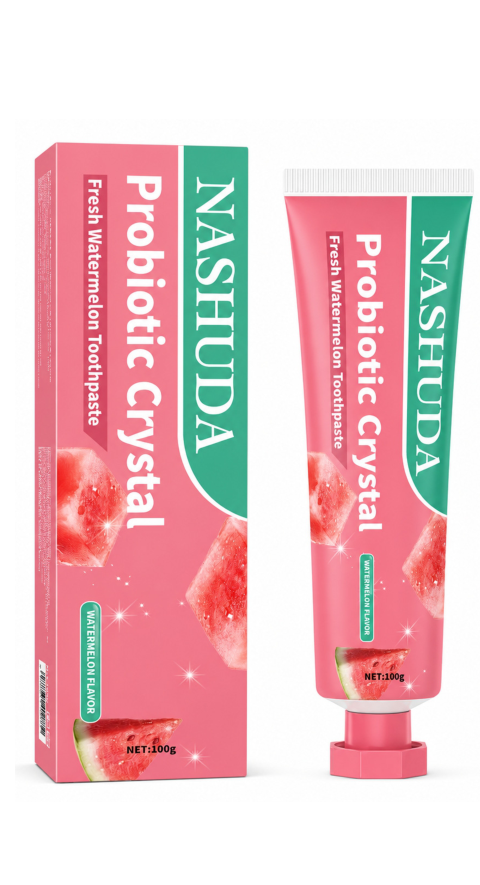
Our NASHUDA series catalog can help identify the item you mean. Ask us to confirm the exact reference and current proposal rather than treating a catalog image as a final specification. Record any approved sample reference on the same order line.
3. Do minimums and packing multiples apply separately?
Ask which conditions apply to each SKU, formula, size and printed component. Do not add the quantities across your shortlist and assume that sum satisfies every minimum. Request a clear answer for the proposed configuration, including whether combining shipment dates or destinations changes any condition.
Then ask for the packing multiple. If your desired quantity does not fit it, request alternatives and approve the resulting quantity explicitly. The supplier should not have to infer whether you prefer rounding upward, changing the mix or leaving an item out. For the complete commercial request, use our toothpaste RFQ checklist.
4. Can every carton be traced back to its contents?
Prepare the following worksheet with the supplier before packing. Repeat a carton identifier on separate rows if a carton contains several SKUs, and count that physical carton only once in the shipment total. Use a unique carton range only when every carton in that range has the same stated contents.
| Carton ID or range | Buyer / supplier SKU | Units per carton | Carton count | Total units for this row |
|---|---|---|---|---|
| ______ | ______ / ______ | ______ | ______ | ______ |
| ______ | ______ / ______ | ______ | ______ | ______ |
Add the order reference, packing-list revision and destination above the table. Attach dimensions, weights and any required batch/date mapping in the detailed packing record. Confirm how labels and the packing list connect, and obtain the receiving warehouse's instructions before requesting a label format.
GS1's logistic label guidance distinguishes homogeneous and heterogeneous logistic units. That distinction is useful when discussing a pallet containing different products. It does not mean a particular barcode system is required for every buyer, or that our proposed shipment already uses it. Confirm any customer-specific identification and data-exchange requirements with the responsible parties.
5. Do the totals reconcile in both directions?
Hypothetical example only: assume packing is agreed as cartons C01–C04 containing 24 units of A each, and C05–C07 containing 12 units of B each. A totals 96 units, B totals 36 units, and the shipment contains seven cartons and 132 units. These numbers illustrate checking arithmetic; they are not our packing specification, MOQ or quotation.
If someone instead proposes one carton containing both A and B, that is a packing change requiring confirmation. Do not treat it as an equivalent document edit. Reconcile totals by SKU against the approved order and totals by physical carton against the packing list. A correct overall quantity can still hide a shortage of one SKU and an excess of another.
6. What happens if one SKU is not ready?
Ask how a delayed or unavailable item will be handled: hold the complete shipment, discuss a partial shipment, revise quantities or consider a separately approved alternative. Request the effect on documents, freight arrangements and quoted scope. Record who must approve the decision. Do not leave substitution authority implicit or assume that an available flavor can replace the ordered one.
- Keep the latest approved SKU quantities and packaging references together.
- Obtain confirmation of any changed carton mapping before dispatch.
- Agree how discrepancies will be recorded at receipt, including carton identifiers and photographs where useful.
- Retain the final packing list alongside the order and relevant approvals.
To discuss a proposed mixed-SKU order with our toothpaste factory, send your SKU list, quantities, destination and requested carton arrangement. We can use that brief to discuss what requires confirmation. Availability, mixed packing, minimums and shipment timing must be established for the specific proposal.